
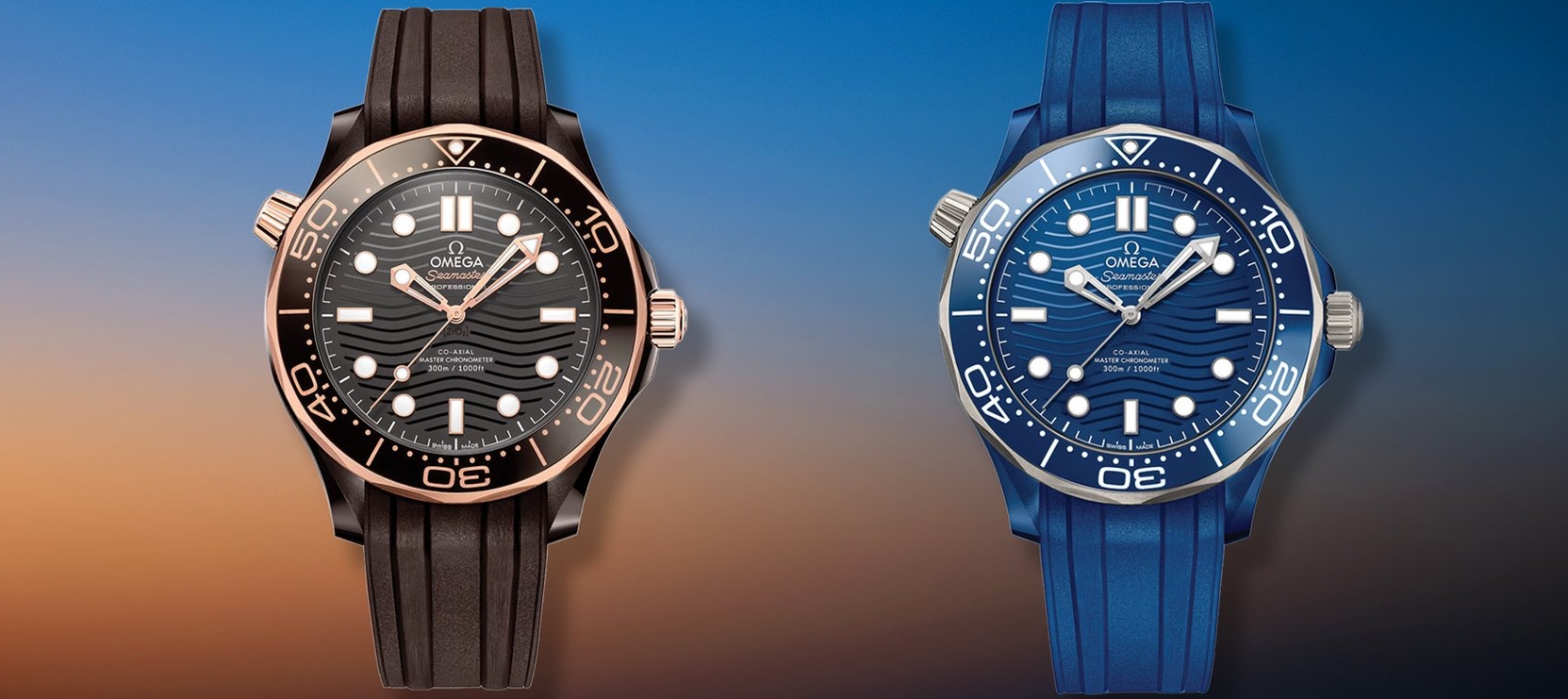
Omega has expanded the Seamaster Diver 300M design in two unusually cohesive colourways: deep blue ceramic with Grade 5 titanium details, and brown ceramic paired with warm Sedna Gold. For readers comparing replica watches UK, these releases are more useful as design benchmarks than as simple watch news. A convincing copy would need to reproduce not only the colour, but also the way the ceramic, metal components, wave dial and fitted rubber strap work together.
Both genuine references use a 43.5 mm ceramic case, a no-date dial and Omega’s automatic Co-Axial Master Chronometer Calibre 8806. They share the same broad architecture, yet the materials give them very different characters. The blue model looks technical and almost monochromatic, while the brown version relies on the contrast between dark ceramic and rose-gold-toned details. That distinction matters because the brown watch presents more opportunities for an inaccurate replica to reveal itself.
Two ceramic versions with distinct identities
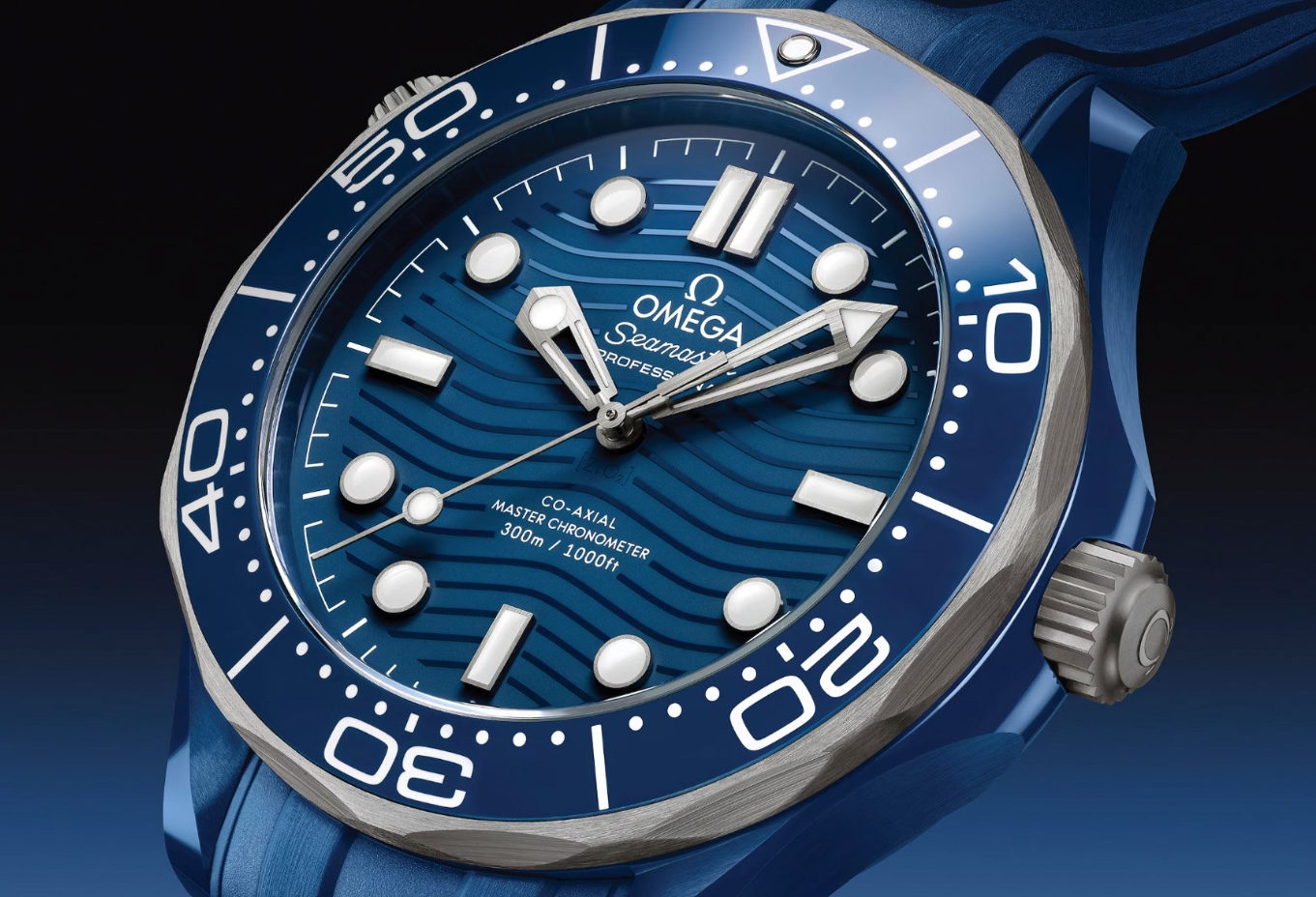
The blue reference 210.92.44.20.03.001 combines a blue ceramic case and laser-engraved wave dial with Grade 5 titanium components. White dial printing, white luminous material and a white bezel scale keep the design crisp. Its matching curved-end rubber strap completes the uninterrupted blue appearance. At approximately 106 grams, the genuine model is relatively light for a watch of this size, although the 43.5 mm diameter and 51.5 mm lug-to-lug length still give it substantial wrist presence.
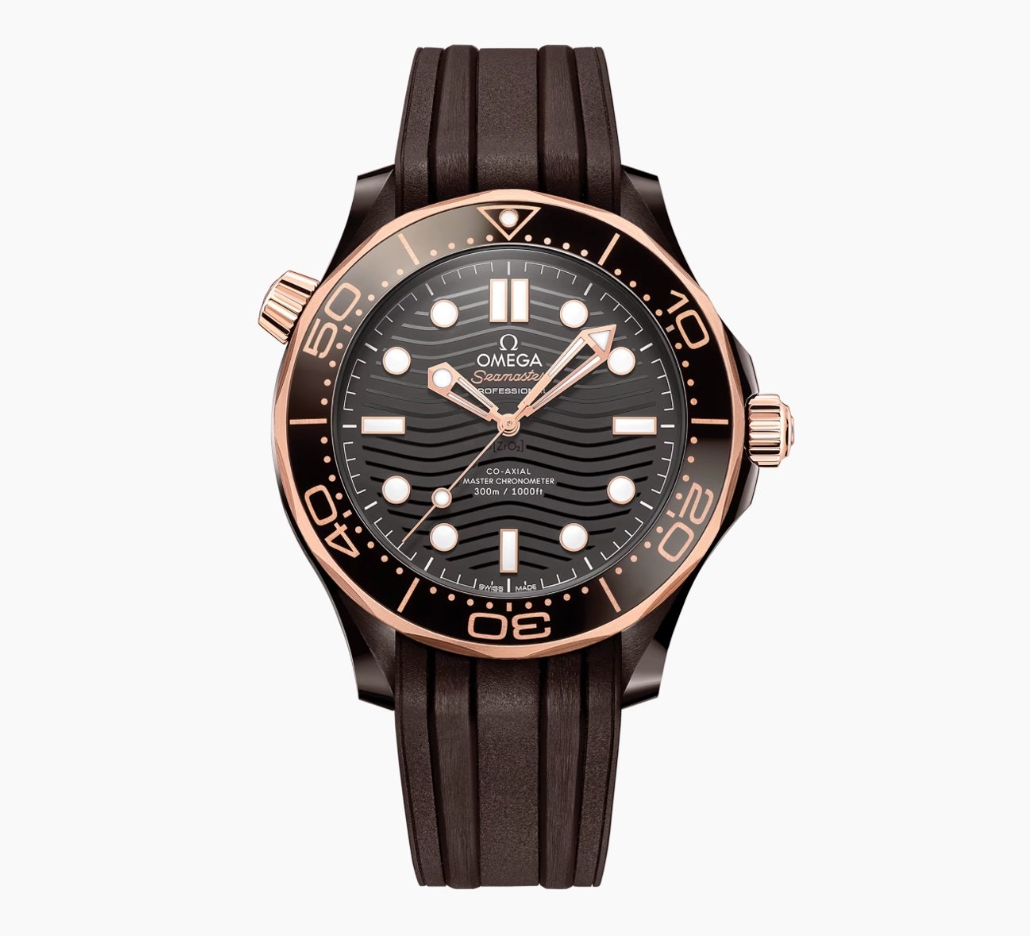
The brown reference 210.62.44.20.13.001 takes a warmer approach. Brown ceramic is paired with 18K Sedna Gold on the bezel, crowns and hands, while the bezel scale uses Omega’s Ceragold treatment. The result is richer and more decorative than the blue version. It also creates a demanding target for a brown ceramic Seamaster replica with gold tone details, since the case, bezel insert, hands, crown and helium escape valve must all agree under different lighting.
| Detail | Blue ceramic model | Brown ceramic model |
|---|---|---|
| Reference | 210.92.44.20.03.001 | 210.62.44.20.13.001 |
| Case and accents | Blue ceramic with Grade 5 titanium | Brown ceramic with 18K Sedna Gold |
| Diameter | 43.5 mm | 43.5 mm |
| Lug to lug | 51.5 mm | 51.5 mm |
| Thickness | 14.27 mm | 14.27 mm |
| Approximate weight | 106 g | 122 g |
| Movement in the genuine watch | Omega Calibre 8806 | Omega Calibre 8806 |
Case colour and finishing deserve close inspection
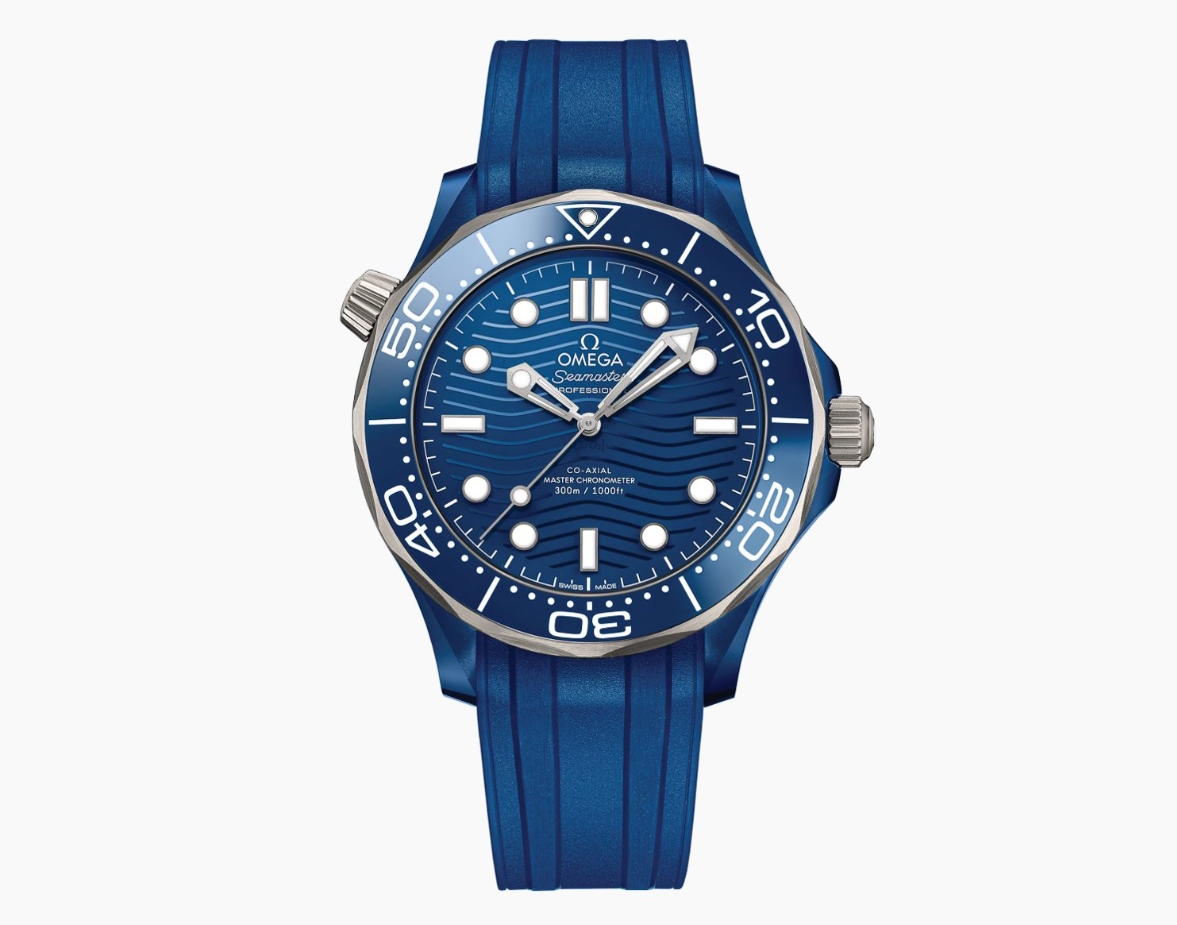
Ceramic does not behave visually like painted steel. It has a particular depth, gloss and edge definition, and those qualities are difficult to judge from heavily edited sales photographs. On a blue ceramic Omega Seamaster replica, the case, dial, bezel insert and rubber strap should look related without appearing as one flat block of colour. A dial that turns almost black while the case remains bright blue may indicate poor colour matching rather than an intentional contrast.
Look closely at the scalloped bezel, crown guards and helium escape valve at 10 o’clock. Their shapes should be clean and evenly proportioned. The bezel should sit level, its triangle should align with 12 o’clock, and the engraved scale should have consistent fill. Uneven edges, shallow numerals or a loose bezel are more meaningful warning signs than broad claims such as “1:1” or “Swiss grade”, which are not standardised quality levels.
The brown design is even less forgiving. A rose-gold-coloured coating can appear too yellow, too pink or noticeably different across separate components. Buyers should also ask how the colour was applied and inspect high-contact areas, especially the crown and buckle, for early wear. Genuine Sedna Gold is a proprietary 18K alloy; a replica seller’s use of the words “Sedna Gold” usually describes a colour or appearance and should not be read as proof of the same material.
The wave dial is the central accuracy test
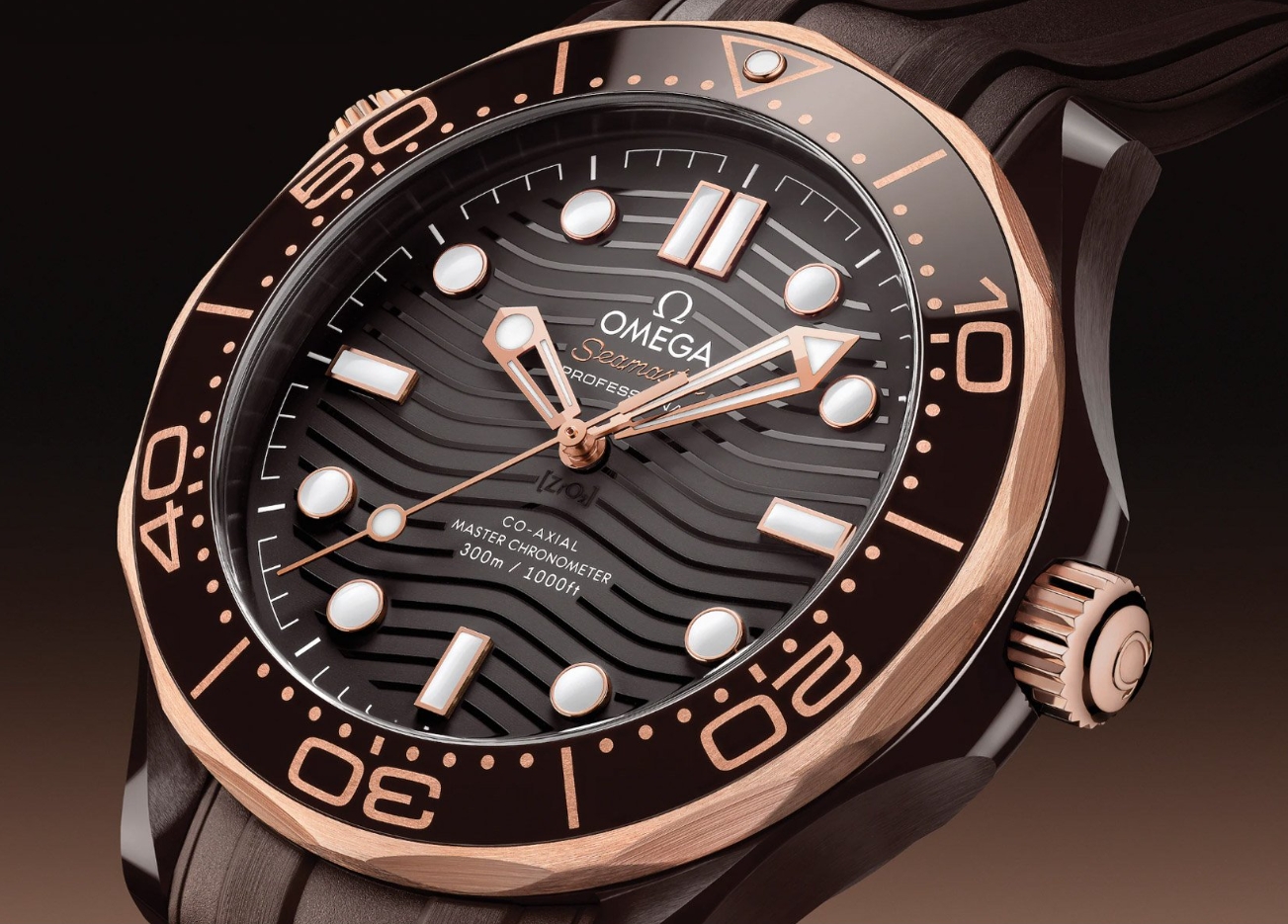
The laser-engraved wave pattern is one of the defining visual signatures of the modern Diver 300M. On a well-executed dial, the waves should remain fine and regular rather than looking like thick grooves. The applied hour markers need even spacing, tidy surrounds and consistent luminous filling. Skeletonised hands should be correctly proportioned, with a clean central stack and no rough edges visible under magnification.
Readers exploring more models can compare the site’s Omega replica watches UK coverage, but photographs should always be assessed model by model. A factory may reproduce a familiar black Seamaster reasonably well while struggling with a newer blue or brown ceramic finish. Stock images of the genuine watch are not evidence of the product a buyer will receive, so current photographs of the actual watch are essential.
Dimensions matter more than the diameter alone
A 43.5 mm Omega Seamaster replica case will not suit every wrist. The 51.5 mm lug-to-lug measurement and 14.27 mm thickness are just as important as the diameter. The curved rubber strap can help the watch sit securely, but stiff material or poorly shaped end links may cause the case to stand proud of the wrist. UK buyers ordering remotely should request the full measurements rather than relying on a description such as “standard men’s size”.
The genuine blue model’s lower weight comes partly from titanium components. A replica made with ordinary steel may feel noticeably heavier, even when its external dimensions are close. Weight alone does not prove quality, but a large difference can reveal a change in materials. The fit between the strap and case is another useful indicator: wide gaps, uneven curvature or a buckle in the wrong metal tone quickly weaken the integrated appearance.
Movement claims need careful interpretation
Omega’s genuine Calibre 8806 offers automatic winding, a 55-hour power reserve and Master Chronometer certification, including resistance to magnetic fields up to 15,000 gauss. Those specifications belong to the authentic movement. A replica movement may imitate the visible layout or decoration through the sapphire caseback, but visual similarity does not provide the same construction, testing or certification.
For a practical assessment, ask for the exact base calibre, measured daily rate, tested power reserve and service options. A clear movement photograph should show the rotor, bridges, screws and engraving without blur or strategic cropping. Claims of a “clone 8806” need supporting detail. A simpler, serviceable automatic movement with honest documentation may be a safer ownership proposition than an elaborate decorative movement with no available parts.
Water resistance should never be assumed
The genuine Seamaster Diver 300M is rated to 300 metres, but that figure cannot be transferred to a replica because the dial carries similar wording. Caseback seals, crown tubes, valve construction and assembly tolerances all affect water resistance. Before swimming, obtain a recent pressure-test result from a competent watchmaker. Without one, treat the watch as splash resistant at most and keep it away from showers, pools and seawater.
This is particularly important with a ceramic case. Ceramic is highly resistant to surface scratching, but it can chip or fracture after a hard impact. Buyers should inspect the lugs, crown guards and case edges closely, because damage in these areas may be difficult to repair. A pressure test should also be repeated after the case has been opened for servicing.
Blue or brown for a UK buyer
The blue model is the more versatile choice. Its cool palette works naturally with casual clothing, and the titanium-coloured details reduce the risk of mismatched plating. The brown version has greater warmth and visual drama, but its gold-tone components demand closer inspection and may show coating wear sooner on an inexpensive copy.
Neither colour should be judged from marketing language alone. A high quality Omega replica watch comparison should focus on accurate dimensions, ceramic colour consistency, dial engraving, hand finishing, bezel alignment, strap fit and transparent movement information. These details give readers a far more reliable basis for comparison than labels such as “AAA”, “super clone” or “perfect”.
Editorial verdict
The blue and brown ceramic Seamaster Diver 300M models are strong subjects for replica-focused analysis because their identities depend on material execution rather than a new case shape. The blue reference asks for disciplined colour matching and clean titanium-style accents. The brown reference adds the harder task of coordinating ceramic with a convincing, durable rose-gold tone.
For most UK readers, the blue design is likely to be easier to wear and easier to evaluate. The brown version can look exceptional when executed well, but it exposes weak plating and colour inconsistency quickly. In either case, the sensible approach is to verify the actual watch, request movement and measurement evidence, and arrange independent pressure testing before exposing it to water.